






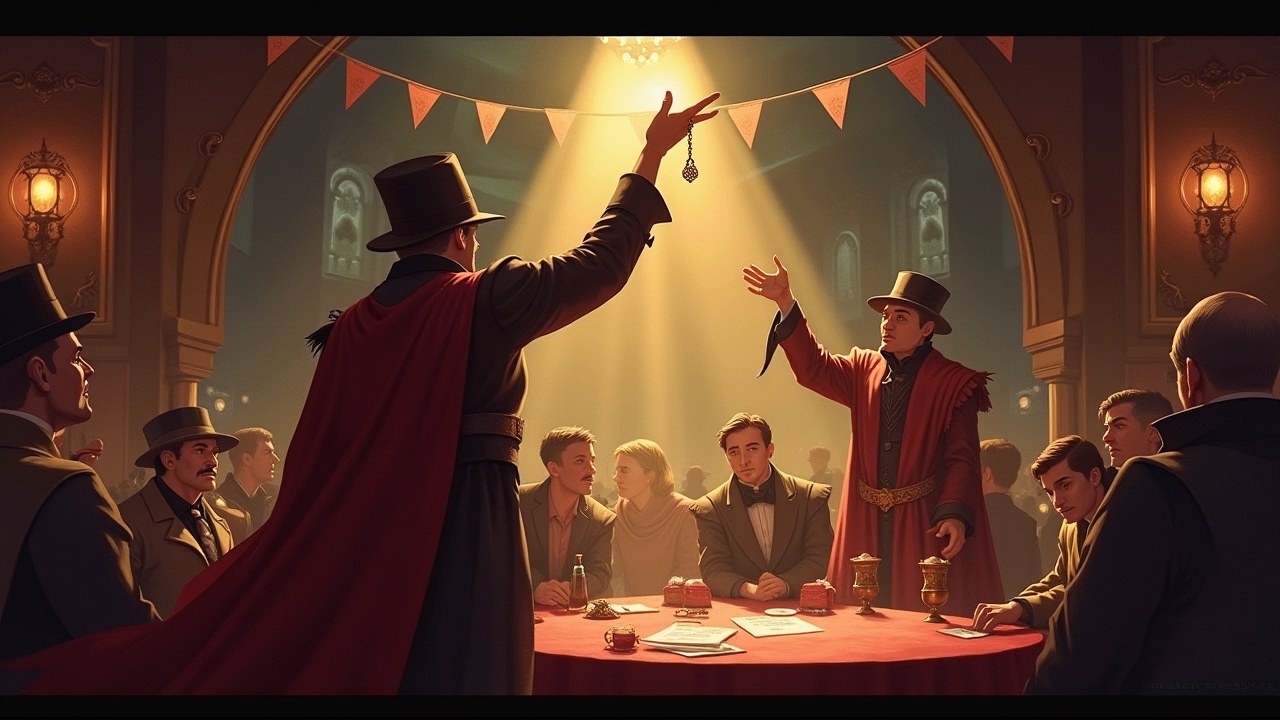
From levitating coins to seemingly impossible escapes, the magic of the stage is a masterclass in deception and wonder. But behind every illusion lies a carefully orchestrated blend of psychology, physics, and showmanship. Let’s pull back the curtain and explore the science of misdirection and the art of making the impossible seem real.
The Power of Misdirection
Misdirection is the cornerstone of many famous magic tricks. It is not just about diverting the audience’s gaze — it’s about directing their attention in a way that makes the impossible appear effortless. Magicians use subtle cues, such as a shift in eye movement or a change in tone, to guide the audience’s focus away from the secret mechanism at play.
One of the most famous examples is the ‘coin vanish’ trick, where a coin seemingly disappears from a hand. The magician’s other hand — often the one not holding the coin — performs a distracting motion, such as a flourish or a gesture, while the coin is secretly palmed or hidden. This technique, known as ‘the rule of three’, is based on the idea that the human brain is more likely to remember the third action in a sequence, making it an effective tool for misdirection.
The Science of Wonder
Magicians are not just performers — they are also scientists of the mind. They understand how the brain processes information and how to exploit its limitations. For instance, the ‘sleight of hand’ relies on the brain’s tendency to fill in gaps in visual information. If a magician quickly moves their hand, the brain may not register the exact movement, allowing the trick to go unnoticed.
Another key element is ‘change blindness’, a phenomenon where people fail to notice changes in their visual field if their attention is elsewhere. This is often used in card tricks, where a card is swapped out of sight while the audience is distracted by a story or a gesture.
Moreover, the use of ‘verbal misdirection’ — where a magician uses words to steer the audience’s thoughts — can be just as powerful as visual cues. A well-timed joke or a dramatic pause can shift focus and make the impossible seem plausible.
Why It Works: The Magic of the Mind
At the heart of every great magic trick is an understanding of human psychology. The brain is wired to look for patterns, to make assumptions, and to fill in gaps. Magicians exploit these tendencies to create the illusion of the impossible. Whether it’s a card appearing in a sealed envelope or a person seemingly walking through a solid wall, the trick is always in the details — and the details are always hidden in plain sight.
So, the next time you witness a magical performance, remember: it’s not just about the tricks — it’s about the science of wonder, the art of misdirection, and the magic of the mind.